TMR Precision Feeding Monitoring
Content
TMR Precision Feeding Monitoring aims to achieve precise production and feeding of fully mixed diets as its core goal. In response to pain points such as imbalanced nutrient ratios, severe feed waste, large operational errors, and difficult management traceability in traditional feeding modes, intelligent equipment and information platforms collaborate to achieve closed-loop control of the entire chain from formula feeding mixing feeding to feeding and re checking. The system can adapt to the personalized nutritional needs of ruminant animals at different growth stages and production performance, promote the transformation of aquaculture from "experience feeding" to "data feeding", and achieve the development goals of cost reduction, efficiency improvement, green and sustainable aquaculture.
The core value of the system is reflected in four dimensions: firstly, ensuring consistency in formula execution, ensuring high uniformity in nutritional formula, feeding formula, and feeding formula; The second is to promote standardization of operations, reducing manual operation deviations through data prompts and error control; The third is to achieve standardized management and support refined management of personnel performance, ranch operations, and feed costs; The fourth is to achieve data visualization, providing real-time, traceable, and comparable data support for aquaculture decision-making.
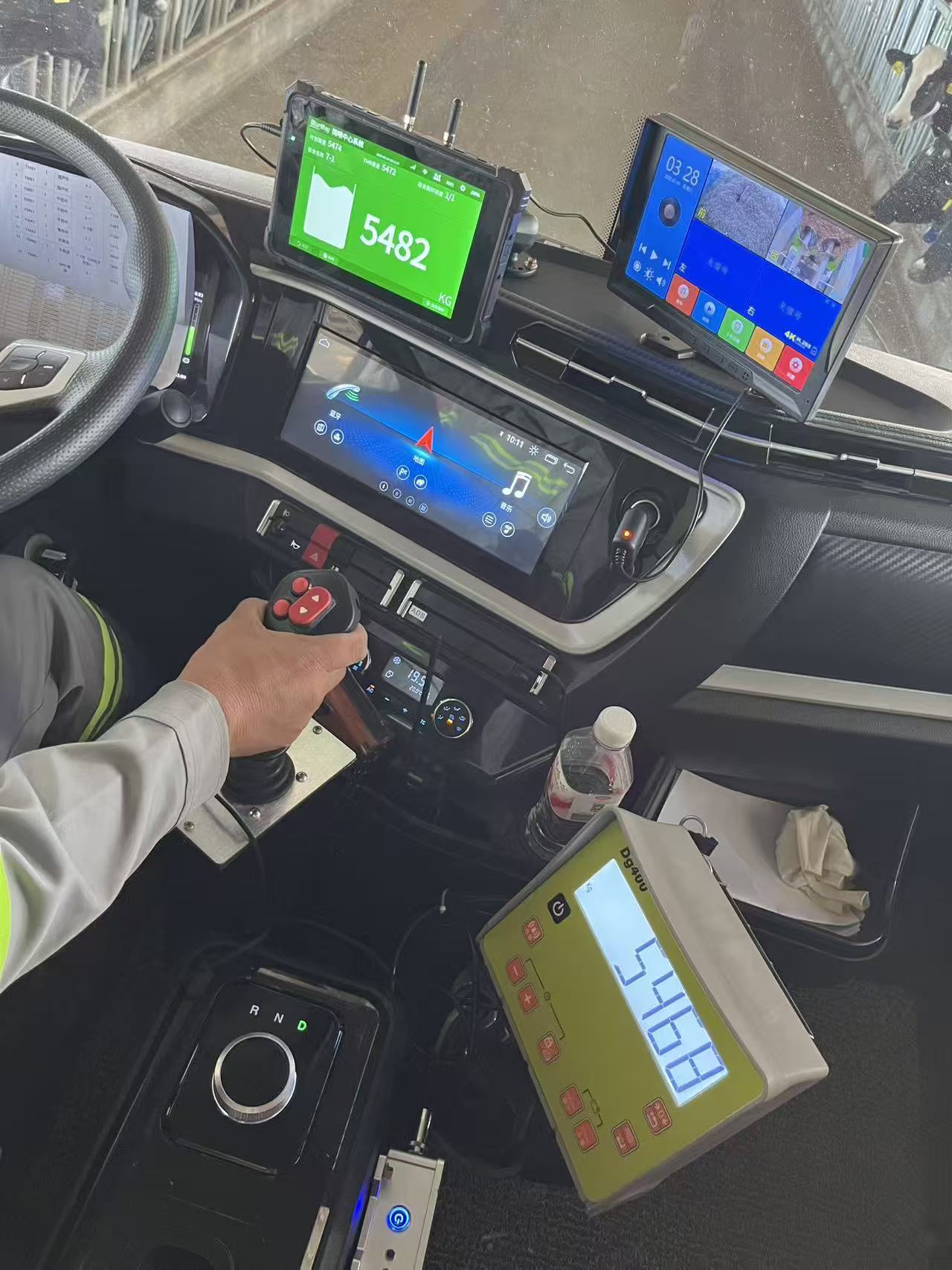
The system functions are designed around the entire feeding process management, covering four major areas: basic configuration, plan execution, data monitoring, and report analysis. It has comprehensive functions, easy operation, and is suitable for the daily operation needs of large-scale ranches.
The basic information management module includes four sub modules: personnel and equipment management, enclosure management, feed management, and formula management. Basic information such as personnel, equipment, inventory, feed composition, and prices can be entered. Based on the growth stage of the animals, a customized diet formula can be formulated, and feeding schedules, feeding sequences, and train schedules can be set to lay a data foundation for precise feeding.
The feeding plan execution module completes operations such as feeding plan issuance, feeding and unloading control, remaining material registration, and Binzhou screening measurement. The system automatically generates a feeding order, and the onboard terminal provides step-by-step prompts for the operation steps. It displays the feed name, planned weight, and actual weighing data in real-time and supports automatic/manual feeding completion; Register the amount of leftover materials in the enclosure, measure the dry matter content of TMR diet, and evaluate the mixing and production effect.
The data report analysis module automatically generates six core reports: feeding report, TMR daily report, weekly report, ingredient report, feeding report, and consumption report. It supports data query, chart display, and Excel export. By comparing planned and actual quantities, calculating error rates, and analyzing feed intake, we can accurately calculate feed consumption and feeding costs, achieving quantifiable, assessable, and optimizable feeding processes.
The remote monitoring and traceability module supports cloud synchronization of farm data, allowing management personnel to remotely view information such as feed input, TMR execution progress, feeding errors, etc. of each farm, achieving unified control of group farms; Full process data tracking can trace the details of feeding, mixing, and feeding for each batch of feed, ensuring stable feeding quality.


| Phone : | +86 10 56299299 |
|---|---|
| Email : | info@gokeagri.com |
| Wechat : | gokeagri |
| Site : | www.gokeagri.com |
| Address : | Building 28, Max Teda Technology Park,Shunyi District,Beijing |